Home > Health > FG Raises Alarm Over Ebola Screening Bre...
FG Raises Alarm Over Ebola Screening Breaches, Orders Tighter Surveillance
By Admin | 24 Oct, 2026 09:23:43am | 47
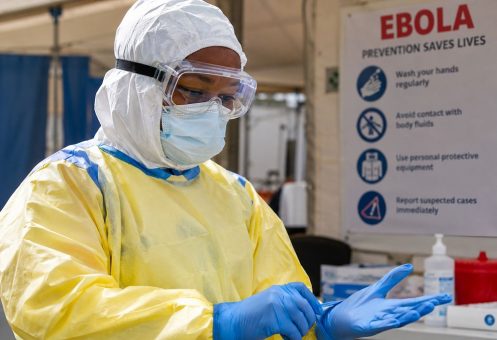
The directive was contained in a circular dated October 22, 2026, signed by the Permanent Secretary of the Federal Ministry of Health and Social Welfare, Daju Kachollum, on behalf of the Coordinating Minister of Health and Social Welfare, Prof. Muhammad Ali Pate.
The ministry directed relevant institutions to comply strictly with screening procedures, health declaration requirements and other preventive measures. It also ordered agencies to document and report actual or attempted breaches through established channels.
The directive followed concerns raised by the Office of the National Security Adviser over reported non-compliance with approved Ebola entry protocols. The ministry also called for improved coordination and information-sharing among agencies to facilitate early detection and prompt responses to public health threats.
The renewed measures came after the Federal Government confirmed an imported case of the Bundibugyo strain of Ebola in Abuja. According to the report, the patient, a 42-year-old Ugandan-born woman, arrived in Nigeria from Uganda and was admitted to a private hospital in the Federal Capital Territory before her infection was confirmed.
The woman was subsequently isolated for treatment, while public health teams began tracing 44 identified contacts and investigating other possible exposures involving healthcare workers, patients, caregivers and travel contacts.
Meanwhile, investigations across several states revealed gaps in public awareness and emergency preparedness. In Lagos, an infectious disease isolation facility in Yaba, previously used for COVID-19 and other infectious diseases, was reportedly converted for use by nursing students, although it was unclear whether isolation services had been relocated elsewhere.
Some markets and motor parks in Plateau, Benue and Kwara states also lacked visible handwashing facilities, while Nasarawa disclosed plans to procure personal protective equipment for frontline health workers.
Other states, including Plateau, Kano and Yobe, reported strengthened surveillance, infection prevention measures and contact-tracing arrangements. Gombe also introduced temperature checks for travellers at its airport.
The report further highlighted public concern over inadequate awareness campaigns, with residents calling on governments and health authorities to provide clear information on prevention, symptoms and reporting suspected cases.
Ebola Virus Disease is transmitted through direct contact with the blood or bodily fluids of infected people or animals, or contaminated materials. The incubation period ranges from two to 21 days.
The Federal Government’s latest directive underscores the need for stricter border screening, effective public communication and improved emergency preparedness to prevent further transmission of the virus.

Leave a Reply
Your email address will not be published. Required fields are marked *
Category
 Health
 Business & Economy
.jpeg) Interviews
 Education
 Technology
 Sports
 Crime & Security
 Opinion
 News
 Religion
 Entertainment
 Politics
 Culture & Tourism