Home > Business & Economy > FG Directs States to Share Cost of Elect...
FG Directs States to Share Cost of Electricity Subsidy
By Chimdiogo | 03 Feb, 2026 08:42:46am | 53
By Chimdiogo Amuh
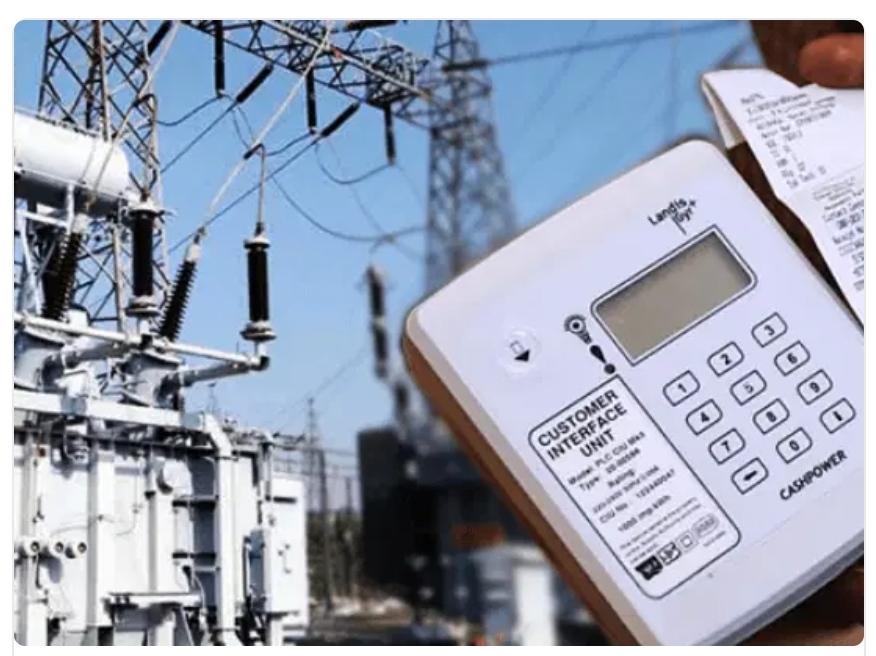
Abuja — The Federal Government has directed state governments to begin sharing the financial burden of electricity subsidies, marking a significant shift in Nigeria’s power-sector financing framework.
President Bola Tinubu approved the policy, which will be funded through the Power Assistance Consumers Fund (PCAF)—a government-backed pool designed to provide targeted subsidies for low-income and vulnerable households, while reducing the strain of universal subsidies on public finances.
More than 18 states currently operate electricity regulatory agencies, including Lagos, Ondo, Osun, Ekiti, Edo, Delta, Bayelsa, Akwa Ibom, Cross River, Abia, Anambra, Imo, Kogi, Niger, Nasarawa, Plateau, Gombe and Jigawa, with others preparing to join.
The Director-General of the Budget Office of the Federation (BoF), Mr. Tanimu Yakubu, disclosed the decision at the opening of the 2026 Post-Budget Preparation Workshop on the Government Integrated Financial Management Information System (GIFMIS) in Abuja. His remarks were delivered by the Director of Expenditure (Social), Mr. Yusuf Muhammed.
Yakubu said states that benefit politically from electricity subsidies must also share responsibility for funding them, stressing that the burden should no longer rest solely on the Federal Government.
“Mr. President has directed that we operationalise a clear framework for sharing the cost of electricity across the federation so that the burden is not treated as a federal residual,” he said. “When tariffs are held below cost, a gap is created. That gap is a subsidy, and a subsidy is a bill.”
According to him, from 2026, subsidy costs will be made explicit, tracked and properly funded to prevent arrears, liquidity crises and hidden liabilities in the power market. He added that any affordability intervention by any tier of government must come with clearly defined, enforceable funding responsibilities.
“This is not punishment; it is alignment,” Yakubu said. “When everyone bears a fair share of the cost, there is greater incentive to pursue efficient, targeted support for the vulnerable and a market that delivers.”
He also revealed that President Tinubu has directed a review of the Fiscal Responsibility Framework to make fiscal rules more dynamic and enforceable, with clearer fiscal anchors, defined escape clauses for shocks, stronger reporting and tighter control of contingent liabilities.
“For 2026, capital proposals must be delivery-ready and, where appropriate, finance-ready,” Yakubu added, stressing that the government is shifting from a long list of projects to fewer, better-funded and deliverable projects anchored on project financing principles.
The Nigerian Governors’ Forum (NGF) said it was reviewing the policy. Its Director of Media and Communications, Yunusa Abdullahi, stated that the forum would not comment further until it had fully examined the details.
Similarly, electricity regulators from several states, including Lagos, Imo, Enugu, Ekiti, Oyo, Ondo, Edo, Niger and Anambra, held an emergency virtual meeting to assess the implications. One participant said the commissions needed time to understand the policy’s impact on states and the wider power sector.
The Chief Executive Officer of the Centre for the Promotion of Private Enterprises (CPPE), Dr. Muda Yusuf, said the move was inevitable given the growing subsidy burden and mounting debts in the power sector.
He noted that states had indirectly borne fuel subsidy costs in the past through reduced FAAC remittances and argued that a similar outcome could follow electricity subsidy reforms. However, he cautioned that political realities, especially in a pre-election year, make immediate cost-reflective tariffs difficult.
Describing the decision as a “major fiscal and political shift,” Prof. Wumi Iledare of the FUPRE Energy Business School said the policy aligns with recent electricity reforms that grant states greater authority, but raises concerns about affordability for poorer states and the risk of new debts.
Legal practitioner and power-sector consultant Mr. Bode Fadipe questioned the Federal Government’s constitutional authority to compel states to fund electricity subsidies, arguing that the wholesale electricity market remains federally controlled and that any state contribution should be voluntary.
Another electricity market expert, Lanre Elatuyi, said implementation could be achieved through deductions from states’ FAAC allocations, though he warned this could spark disputes unless accurate consumption data is available.
He added that, given the scale of power-sector debts, it is reasonable for states—now empowered by the Electricity Act to regulate their own markets—to contribute to subsidy payments.
The policy, analysts say, could either deepen fiscal pressures or accelerate reforms toward targeted subsidies, realistic tariffs and improved accountability, depending on how transparently and effectively it is implemented.

Leave a Reply
Your email address will not be published. Required fields are marked *
Category
 Religion
 .jpeg) Interviews
Interviews Health
 Culture & Tourism
 Opinion
 Education
  Politics
 Technology
 Business & Economy
 Entertainment
 Sports
  News
News Crime & Security