Home > News > Mbah at 54: The Governor Who Refuses the...
Mbah at 54: The Governor Who Refuses the Status Quo
By AnchorNews | 17 Mar, 2026 12:12:45am | 63
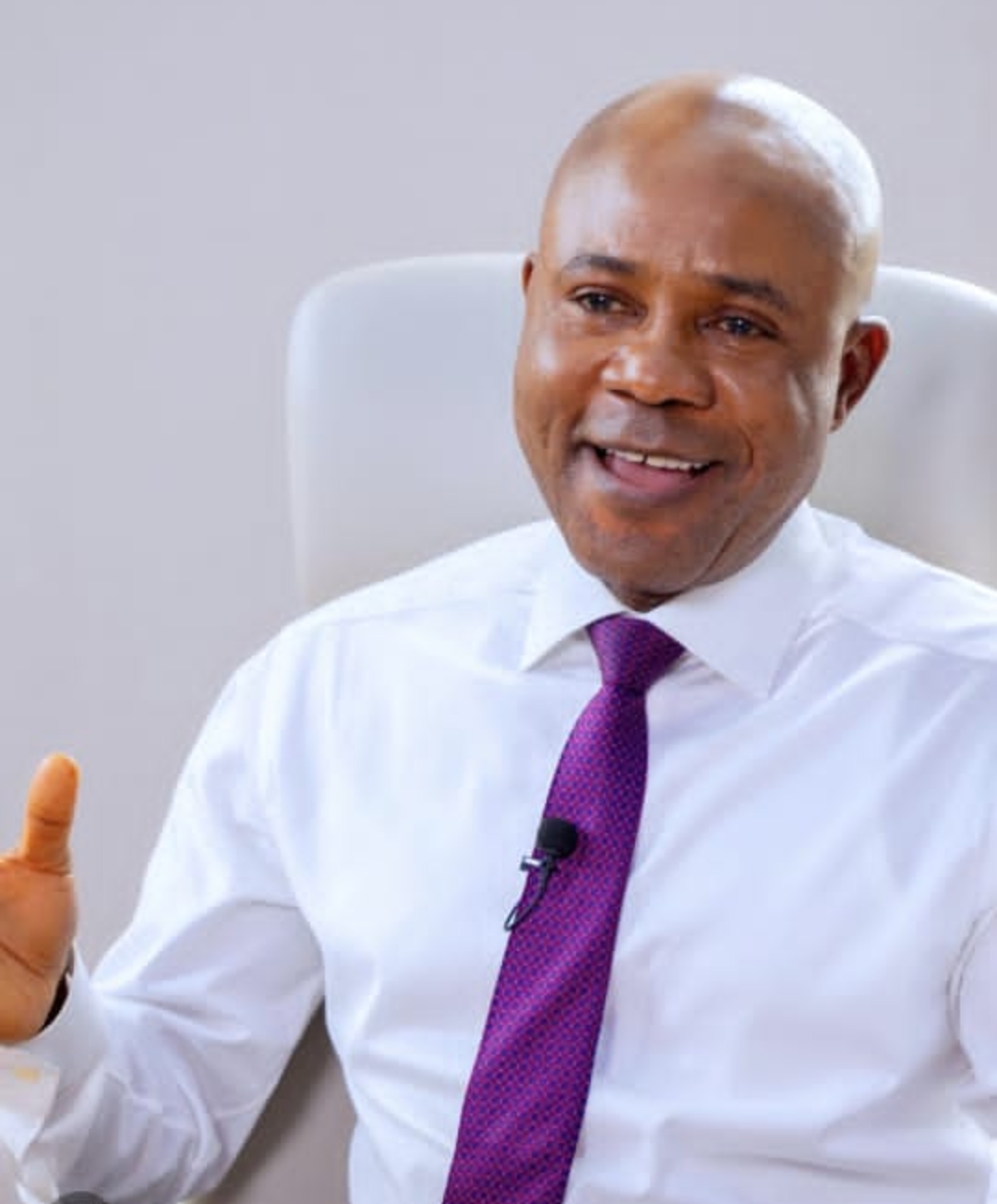
By Clinton Umeh
When Peter Mbah assumed office in 2023, he did not present governance as a routine continuation of the past. Instead, he declared a philosophy that has since shaped the direction of his administration: Disruptive Innovation.
From the onset, Mbah made it clear that the old order would not define his leadership. His message to the people of Enugu State was direct — governance would be business unusual.
Two years later, that declaration has become the defining tone of an administration determined to challenge familiar patterns of public service and rebuild the machinery of government with the mindset of a modern enterprise.
Governing Like a CEO
Mbah approached office not simply as a political leader but as a chief executive determined to raise the standard of governance. His background in the private sector shaped his belief that government must operate with the discipline, urgency and strategic planning associated with successful corporate institutions.
The result has been an administration driven by clear targets, measurable outcomes and a relentless push to modernise state institutions.
One of the most striking manifestations of that philosophy is the Command and Control Centre, a technology-driven security hub that has placed Enugu among the most digitally monitored states in Africa. Widely regarded as one of the most advanced facilities established by a subnational government in sub-Saharan Africa, the centre integrates surveillance systems, rapid response coordination and data analysis to strengthen public safety across the state.
For Mbah, security is not merely about patrols and checkpoints; it is about building systems capable of anticipating and responding to threats in real time.
Reviving Dormant Assets
Another defining feature of the administration has been the decision to confront assets that had long fallen into disuse.
Across Enugu, several public investments that once symbolised economic promise had become dormant monuments to missed opportunities. Rather than abandon them, the government moved to restore them to productive life.
Today, Niger Gas Company Limited has resumed operations, providing industrial energy supply and reinforcing the state’s industrial ambitions.
At the same time, the iconic Hotel Presidential—once a landmark hospitality destination—has begun a remarkable transformation, returning gradually to the stature it once held as a symbol of Enugu’s economic vibrancy.
These efforts reflect a broader strategy: recovering public assets not only preserves history but also unlocks economic value.
A State Turned Construction Site
Drive through Enugu today and a striking reality emerges: the state has effectively become a construction site.
Road construction and reconstruction projects are unfolding across urban centres and rural communities alike. Major arteries are being rebuilt, while new corridors are opening communities that were once cut off from economic opportunities.
The administration sees infrastructure as more than physical development; it is the foundation for economic expansion. With improved road networks, agricultural communities gain easier access to markets, businesses benefit from smoother logistics, and new investment zones become viable.
In effect, each kilometre of road is designed to expand the state’s economic geography.
Smart Schools for the Next Generation
Perhaps the most ambitious social investment of the administration lies in education.
The government launched a bold initiative to build Smart Schools in every political ward across Enugu State. These schools are designed not simply as classrooms but as digital learning environments equipped with modern technology and facilities aimed at preparing students for a knowledge-driven world.
Some of these schools are already in use, providing early evidence of the transformation envisioned for the education sector. By placing technology at the heart of learning, the programme seeks to ensure that children from every community—urban or rural—have access to quality education that meets global standards.
Healthcare Closer to the People
Healthcare delivery has also seen a deliberate shift toward accessibility.
The establishment of Type II hospitals across communities is intended to ensure that residents can receive quality medical care without travelling long distances. These facilities are designed to bring affordable and efficient healthcare services closer to the people.
The approach reflects a broader philosophy: development should not remain concentrated in cities but must reach communities where citizens live and work.
Tackling the Water Challenge
One of the most persistent challenges faced by residents of Enugu has been access to reliable public water supply.
The administration set an ambitious target during its first months in office—to generate sufficient water for the state within 180 days. That goal was achieved. Yet, the government acknowledged that production alone was not the main challenge.
The greater task lay in reticulation, the complex network required to deliver water from treatment plants to homes and neighbourhoods.
Today, that work is unfolding rapidly. Areas such as Trans Ekulu, parts of Abakpa, Independence Layout and several other communities that have long lived without public water supply are witnessing the laying of new pipelines.
In addition, the government has begun replacing aging asbestos pipes with stronger and healthier alternatives designed to support a modern distribution system.
Within the coming months, many observers believe the water story in Enugu could take on a dramatically different shape.
Workers and Economic Confidence
Beyond infrastructure and public services, the administration has also paid attention to workers’ welfare.
Enugu has emerged as one of the states paying wages above the national minimum wage benchmark, a move that signals the government’s commitment to improving living standards and stimulating economic activity within the state.
For many civil servants, it represents both recognition of their contribution and a practical step toward economic stability.
The Meaning of 54
As Governor Peter Mbah marks his 54th birthday, the narrative surrounding his leadership is one of ambition, urgency and refusal to accept the limitations of the past.
His administration is built around a clear belief: that governance must challenge existing boundaries and pursue possibilities that once seemed distant.
Whether through technology-driven security, revived public assets, new infrastructure corridors, modern schools, expanded healthcare or renewed water systems, the message behind the policies remains consistent.
For Mbah, leadership is not about preserving the familiar. It is about reshaping the future.
And at 54, the governor appears determined to continue proving that in Enugu, the status quo is no longer an option.
Clinton Umeh
A Public Affairs Analyst Writes from Enugu

Leave a Reply
Your email address will not be published. Required fields are marked *
Category
 Education
  Opinion
.jpeg) Interviews
Interviews Culture & Tourism
 Health
 News
News Business & Economy
 Technology
 Sports
  Politics
 Entertainment
 Crime & Security
 Religion