Home > News > Budget Office: PFIPC Originated Under Bu...
Budget Office: PFIPC Originated Under Buhari Administration, No Funds Released to Council
By AnchorNews | 25 Jul, 2026 06:06:10am | 59

By Sandra Ugwu
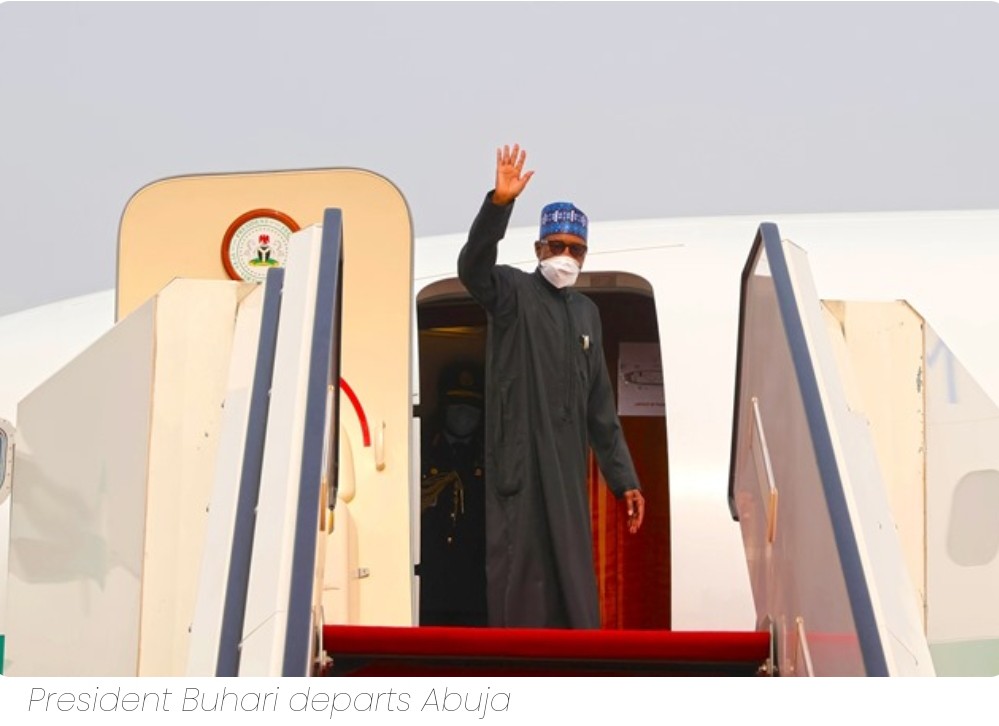
Abuja — The Budget Office of the Federation (BOF) has stated that the controversial Presidential Foreign Intervention Promotion Council (PFIPC), which has been declared a fake agency by the Presidency, originated during the administration of former President Muhammadu Buhari and was not created by the Budget Office.
The clarification came on Friday in a statement by the Director-General of the Budget Office, Mr. Tanimu Yakubu, following his appearance before the House of Representatives. The statement also explained how the PFIPC was allocated funds in the 2026 Appropriation Act despite the Presidency's subsequent declaration that the council was not a legitimate government agency.
According to Yakubu, the PFIPC evolved from the Presidential Economic Advisory Council (PEAC), which was inaugurated by the late President Muhammadu Buhari on October 9, 2019.
He explained that before preparations for the 2026 budget commenced, relevant government institutions had already completed administrative processes relating to the council.
"The Office of the Accountant-General of the Federation assigned an administrative code to the PFIPC. The Office of the Head of the Civil Service approved an authorised establishment and granted a recruitment waiver. The applicable public service salary structure also existed. These instruments were not created by the Budget Office; they were received by it," Yakubu stated.
He stressed that the Budget Office merely carried out its statutory responsibility of determining the fiscal implications of the approvals submitted by other government agencies.
Yakubu disclosed that although the council initially proposed a personnel budget of N3.85 billion for the 2026 fiscal year, the Budget Office independently reviewed the proposal and reduced it to N802.98 million based on approved staffing levels, salary structures, recruitment waivers and established costing guidelines.
He dismissed suggestions that the office simply adopted the council's request, insisting that the approved personnel provision reflected its own fiscal assessment.
The Budget Office further clarified that despite the appropriation, the council was unable to access any personnel funds because it failed to obtain Financial Clearance, a mandatory approval required before recruitment and salary payments can commence.
Yakubu explained that Financial Clearance confirms compliance with all fiscal and regulatory requirements and can only be issued after an appropriation bill becomes law and other statutory conditions are met.
He noted that although President Bola Tinubu assented to the 2026 Appropriation Bill on March 31, 2026, another key requirement remained outstanding as the National Salaries, Incomes and Wages Commission had not certified the council's proposed staffing and remuneration structure.
"As a result, there was no Financial Clearance, no lawful recruitment, no payroll enrolment and no salary payment," he said.
The Director-General emphasized that personnel appropriations are not released to agencies as lump-sum cash but are paid monthly into the verified bank accounts of government employees after all legal conditions have been fulfilled.
He maintained that since no employees were recruited or enrolled on the federal payroll, none of the N802.98 million personnel allocation was released.
"Not one kobo of the personnel provision could lawfully have been drawn. Not one kobo was drawn. There is no personnel expenditure to recover because there was no personnel expenditure," Yakubu stated.
The PFIPC controversy became public on June 11, 2026, when the Chief of Staff to the President, Femi Gbajabiamila, declared the council a fake agency and petitioned law enforcement authorities to investigate its activities.
However, the council's Director-General, Prince Adeniyi Adeyemi, rejected the Presidency's position during a press conference on June 26, alleging that Gbajabiamila received N400 million through a proxy and demanded an additional N200 million to facilitate his appointment.
Gbajabiamila denied the allegations and subsequently filed a N15 billion defamation suit against Adeyemi.
Adeyemi was later arrested by the police over allegations of forgery and other offences connected with the PFIPC scandal and is currently in custody.
Before his arrest, he claimed he personally lobbied officials of the Budget Office to include the council in the 2026 federal budget.
The controversy deepened after the Central Bank of Nigeria confirmed that it opened two domiciliary accounts for the PFIPC, one in United States dollars and another in British pounds, following directives from the Office of the Accountant-General of the Federation. However, the apex bank clarified that the accounts were never funded or operated.

Leave a Reply
Your email address will not be published. Required fields are marked *
Category
 Politics
 Crime & Security
 Culture & Tourism
.jpeg) Interviews
Interviews Education
  Entertainment
 News
News Health
 Technology
 Opinion
 Sports
  Religion
  Business & Economy