Home > Politics > 2027 Presidency Race Heats Up as Tinubu,...
2027 Presidency Race Heats Up as Tinubu, Atiku, Obi Face Hate Speech, Violence Fears
By AnchorNews | 23 Aug, 2026 06:49:46am | 71
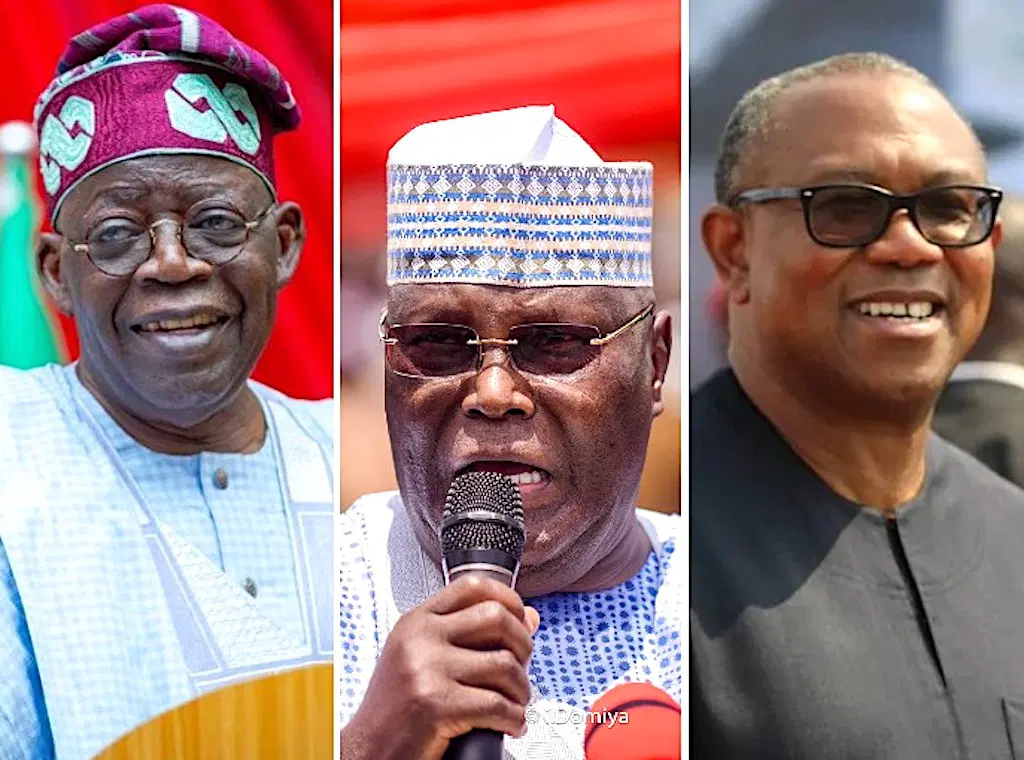
By Sochima Agbo
Campaigns for the 2027 presidential and National Assembly elections have begun amid concerns that the contest could be marred by hate speech, ethnic and religious profiling, misinformation, personal attacks and political violence.
The campaigns started on August 19, 2026, and will end on January 15, 2027, ahead of the January 16 elections. Governorship and State House of Assembly campaigns are scheduled to run from September 9 to February 5, with elections on February 6.
President Bola Tinubu of the All Progressives Congress (APC), former Vice President Atiku Abubakar of the African Democratic Congress (ADC), and Peter Obi of the National Democratic Congress (NDC) are among the leading contenders.
The campaign season followed the signing of a National Peace Accord by some presidential candidates, committing them to peaceful and issue-based campaigns. Obi, SDP candidate Adewole Adebayo and AAC candidate Omoyele Sowore signed the accord, while Tinubu was represented by Secretary to the Government of the Federation, George Akume. Atiku was absent.
Despite the peace initiative, political tensions remain high. Atiku has challenged Tinubu's eligibility in court, while Obi is pursuing a case in the United States seeking information relating to a drug case involving the President.
Civil society groups, lawyers and political analysts have warned that the election could witness a return of the ethnic, religious and regional rhetoric seen in previous election cycles, particularly in 2011, 2015 and 2023.
President of the Centre for Change, Dr Joe Okei Odumakin, warned against the weaponisation of social media, noting that manipulated videos, false information and inflammatory statements could spread rapidly and trigger tensions. She urged politicians to focus on records and policies rather than ethnicity or religion and called on security agencies to act swiftly against credible threats.
ActionAid Nigeria Country Director, Dr Andrew Mamedu, similarly urged politicians to address hunger, unemployment, insecurity and rising living costs instead of exploiting ethnic and religious divisions. He also called for peace agreements to be reflected in campaign activities and supporters' conduct.
Afenifere General Secretary, Chief Ademola Folarin, however, described hate speech and ethnic profiling as familiar features of Nigerian politics, while former Political Adviser to ex-President Olusegun Obasanjo, Chief Akin Osuntokun, expressed hope that such tactics would remain exceptions rather than dominate the campaign.
The Yoruba Council of Elders urged political actors to exercise restraint and protect national unity. Its Secretary, Chief Oluwole Oladipo, called for free, fair and peaceful elections.
Human rights lawyers Idris Faro and Toluwa Odekhe also urged political parties and their supporters to obey electoral rules and avoid treating elections as a do-or-die affair. Odekhe warned that inflammatory online content and ethnic mobilisation were already emerging ahead of the polls.
Executive Director of the International Press Centre, Lanre Arogundade, urged the media, civil society and voters to expose breaches of the peace agreement and demand sanctions against offenders.
Lawyer and public affairs analyst Patrick Onoja identified hate speech, ethnic and religious mobilisation, political violence and fake news as major threats. He warned that artificial intelligence could worsen the problem through deepfakes, fabricated audio, manipulated videos and false documents.
Onoja called for early enforcement of electoral laws, stronger fact-checking and greater emphasis on manifestos, policies and public debates, warning that the 2027 election must be a contest of ideas, not a “war of identities.”
With campaigns now underway, the coming months will determine whether the National Peace Accord can translate into responsible political conduct or whether the race will descend into the divisive rhetoric and violence that have characterised some previous elections.
Leave a Reply
Your email address will not be published. Required fields are marked *
Category
 Culture & Tourism
 Business & Economy
.jpeg) Interviews
Interviews Health
 Sports
  Religion
  Crime & Security
 Entertainment
 Opinion
 Politics
 News
News Education
  Technology