Home > Opinion > Nnolim Nnaji And The Changing Face of Nk...
Nnolim Nnaji And The Changing Face of Nkanu Politics
By AnchorNews | 13 Sep, 2026 06:56:14am | 171
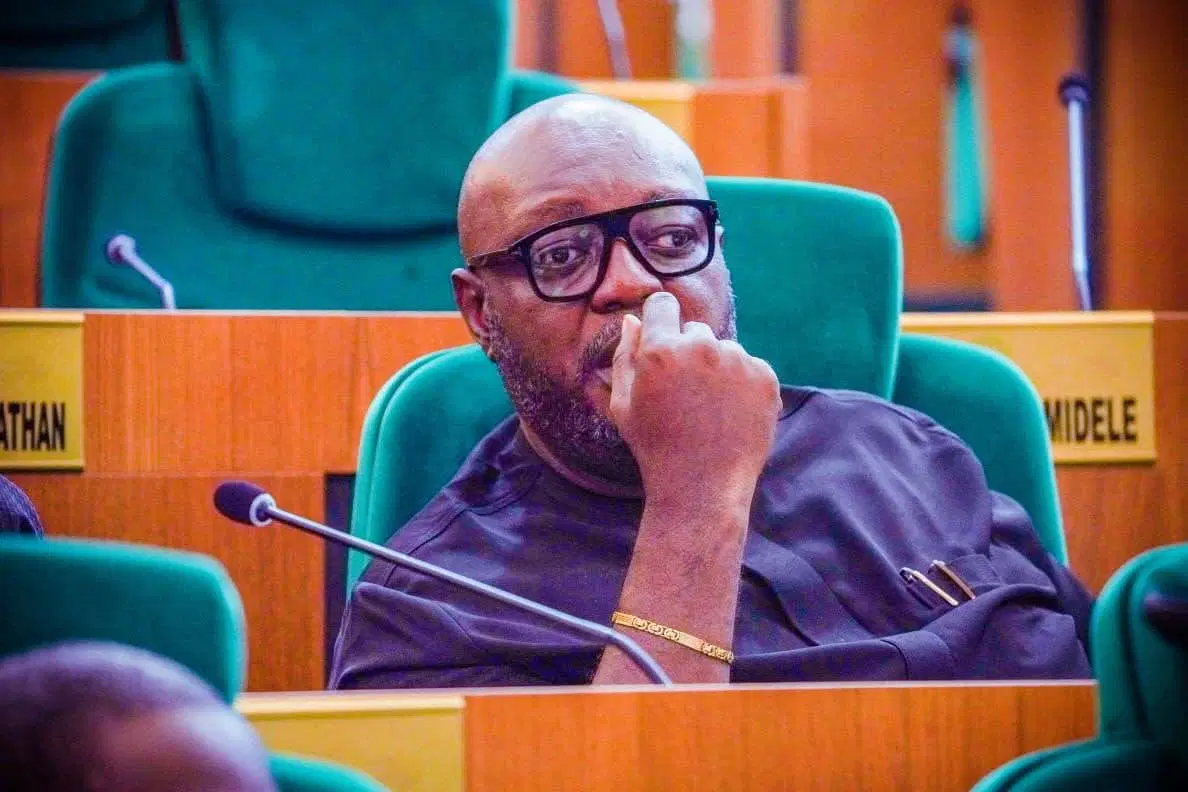
...When Representation Speaks
By Dr. Buchi Nnaji | Political Opinion Writer & Constituent
In politics, it is easy to make promises, deliver speeches and attract applause. The more difficult task is to leave behind things that people can see, touch and use long after the political rally is over. For the people of Nkanu East/Nkanu West Federal Constituency, the most meaningful way to assess Rt. Hon. Nnolim John Nnaji's representation between 2019 and 2026 is therefore not through political slogans, but through the evidence of legislative engagement, constituency projects and interventions that have reached communities. As a constituent and political opinion writer, I have followed this journey with particular interest, and I believe the record deserves a fair and objective examination.
Nnolim's emergence and subsequent re-election in 2023 established continuity in the representation of the constituency at the House of Representatives. But winning elections is only the beginning of public service. What matters thereafter is how effectively a representative converts the opportunities provided by legislative office into benefits for constituents. In Nnolim's case, that conversion has increasingly been visible in roads, bridges, water projects, electricity, education, agriculture, healthcare, empowerment and social interventions. The cumulative picture is that of a representative who has sought to connect the federal government to communities that often feel distant from Abuja and its institutions.

One of the most visible aspects of the reported interventions is infrastructure. Roads and bridges are not merely construction projects; they are economic arteries. They determine how farmers transport produce, how traders access markets, how students reach schools and how patients get to healthcare facilities. Across Nkanu East and Nkanu West, several road interventions have been associated with Nnolim's representation, including projects around Nkwo Market–Eke Egboagu, Umuiba Nara, Nkerefi, Amagunze/Ihuokpara–Izza, and Orie Mba–Agbede Akpugo. The reported interventions at Nvene Bridge in Akegbe-Ugwu and Ovu Bridge at Nkerefi are equally significant because bridges can transform accessibility for communities previously constrained by difficult terrain and waterways.

Water supply is another area where representation becomes tangible. Reports on Nnolim’s constituency projects indicate the facilitation of more than 20 solar-powered boreholes across various communities. For many rural households, access to potable water is not a luxury but a fundamental necessity. A functional borehole can reduce the daily burden of searching for water, improve sanitation and contribute to healthier communities. The decision to incorporate solar power into some of these projects is also noteworthy because it provides an alternative to dependence on an already unreliable electricity grid. These interventions may appear modest when viewed from Abuja, but at community level, they can make a substantial difference to everyday life.

Electricity and renewable energy have similarly featured in the constituency intervention agenda. Reports indicate the facilitation of transformers for communities including Ozalla, Nara, Obe, Nomeh and Amurri, alongside the installation of more than 200 solar streetlights at strategic locations. Solar-powered charging kiosks and refrigeration facilities have also been reported in places such as Ugbawka and Ohuani/Onichagu. In a society where electricity remains one of the greatest constraints on small businesses, such interventions have economic significance. Streetlights can support safer movement and evening commerce, while energy access can help petty traders and entrepreneurs preserve goods, charge devices and remain productive.


Education, however, may prove to be among the most enduring components of this representation. Roads connect communities, but education transforms the people who inhabit them. Reported interventions include classroom blocks, educational infrastructure and assistance to indigent students. The reported ₦1.5 billion upgrade of Ozalla High School stands out as an ambitious intervention in secondary education. More importantly, Nnolim has pursued the educational agenda legislatively through bills seeking the establishment of a Federal University of Agriculture in Ugbawka and a Federal College of Nursing and Midwifery in Obuoffia. While the sponsorship of a bill should not be confused with its eventual enactment or implementation, the proposals reveal an effort to think beyond temporary interventions and advocate for institutions capable of producing long-term human-capital development.

Agriculture and economic empowerment also deserve attention because the prosperity of Nkanu cannot depend entirely on government employment or migration to urban centres. The reported “One-Man-One-Palm” initiative, through which about 10,000 palm seedlings were distributed, represents an attempt to encourage productive agriculture and create assets that can yield benefits over time. Farmers have also reportedly received fertilizers, sprayers and other inputs, while tricycles have been provided to support agricultural and commercial activities. Youth and small-business empowerment programmes have similarly featured in the constituency agenda.

The social dimension of the representation is equally noteworthy. Reports indicate the construction and furnishing of houses for vulnerable constituents, including two-bedroom homes for indigent beneficiaries, as well as other humanitarian interventions. Healthcare has also featured through the provision of medical equipment and legislative advocacy. Nnolim sponsored legislation relating to the proposed Federal Medical Centre, Akpugo, and later sponsored amendments concerning federal medical centres. These efforts point to an understanding that representation must address both infrastructure and human welfare.

Beyond constituency projects, Nnolim's legislative career has acquired a national dimension. During the Ninth National Assembly, he served as Chairman of the House Committee on Aviation, giving him a significant oversight role in a strategic sector of the Nigerian economy. In the Tenth Assembly, he became Chairman of the House Committee on Ports and Harbour. These positions are not merely political titles; they place him within the national oversight structure of sectors central to transportation, trade, logistics, investment and economic development. For a representative from Nkanu, occupying such positions also provides an opportunity to bring constituency concerns into national conversations and to acquire the experience and networks necessary for effective legislative representation.
There is, however, a responsibility that comes with writing about political achievements: honesty. As a constituent and opinion writer, I believe Nnolim should be commended where his interventions are demonstrable, but accountability must remain part of the conversation. A responsible scorecard must distinguish between projects announced, projects awarded, projects under construction and projects completed and functioning. It should also ask questions about funding, location, beneficiaries, maintenance and measurable outcomes. These questions do not diminish achievement; they strengthen democracy. Indeed, the best tribute any public servant can receive is one that survives scrutiny rather than one built entirely on political loyalty.
After six years, the emerging picture is therefore difficult to ignore. Nnolim Nnaji's representation has been characterized by an emphasis on visible constituency development alongside legislative advocacy and national committee responsibilities. From roads and bridges to boreholes and electricity interventions, from schools and agricultural support to empowerment and housing, the reported projects represent an attempt to bring the dividends of federal representation closer to ordinary people. The record is not perfect, and no serious observer should pretend that every challenge in Nkanu East and Nkanu West has been solved. Significant needs remain, and the next phase must focus on completing ongoing projects, expanding economic opportunities, improving healthcare and education, and ensuring equitable distribution across communities.
Ultimately, political representation should be judged by what remains after the campaign posters have disappeared. It should be judged by the road that still carries farmers to market, the bridge that keeps communities connected, the borehole that continues to provide water, the school that gives a child a better future, the electricity project that keeps a small business running and the legislative intervention that creates opportunities for generations yet unborn. From my perspective as a constituent, the 2019–2026 record of Rt. Hon. Nnolim Nnaji provides substantial evidence of an attempt to make representation visible and development-oriented. The work is certainly not finished, but the journey has produced a body of interventions worthy of recognition, constructive scrutiny and, above all, continued expectation that public office must remain about service to the people.
Leave a Reply
Your email address will not be published. Required fields are marked *
Category
.jpeg) Interviews
Interviews Business & Economy
 Health
 Entertainment
 Sports
  Culture & Tourism
 Technology
 Crime & Security
 Education
  Opinion
 Religion
  News
News Politics