Home > Opinion > Measuring Leadership by Impact Using SAM...
Measuring Leadership by Impact Using SAMSON CHUKWU NNAMANI as a Case Study
By AnchorNews | 10 Feb, 2026 08:09:09am | 655
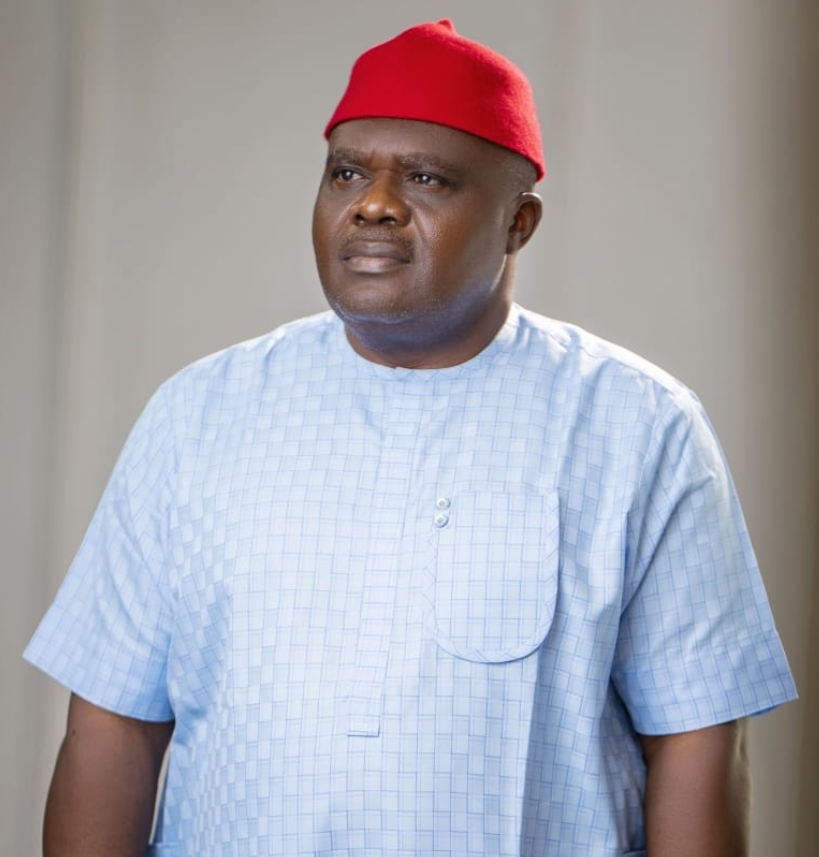
By Chibuike Ugwuanyi
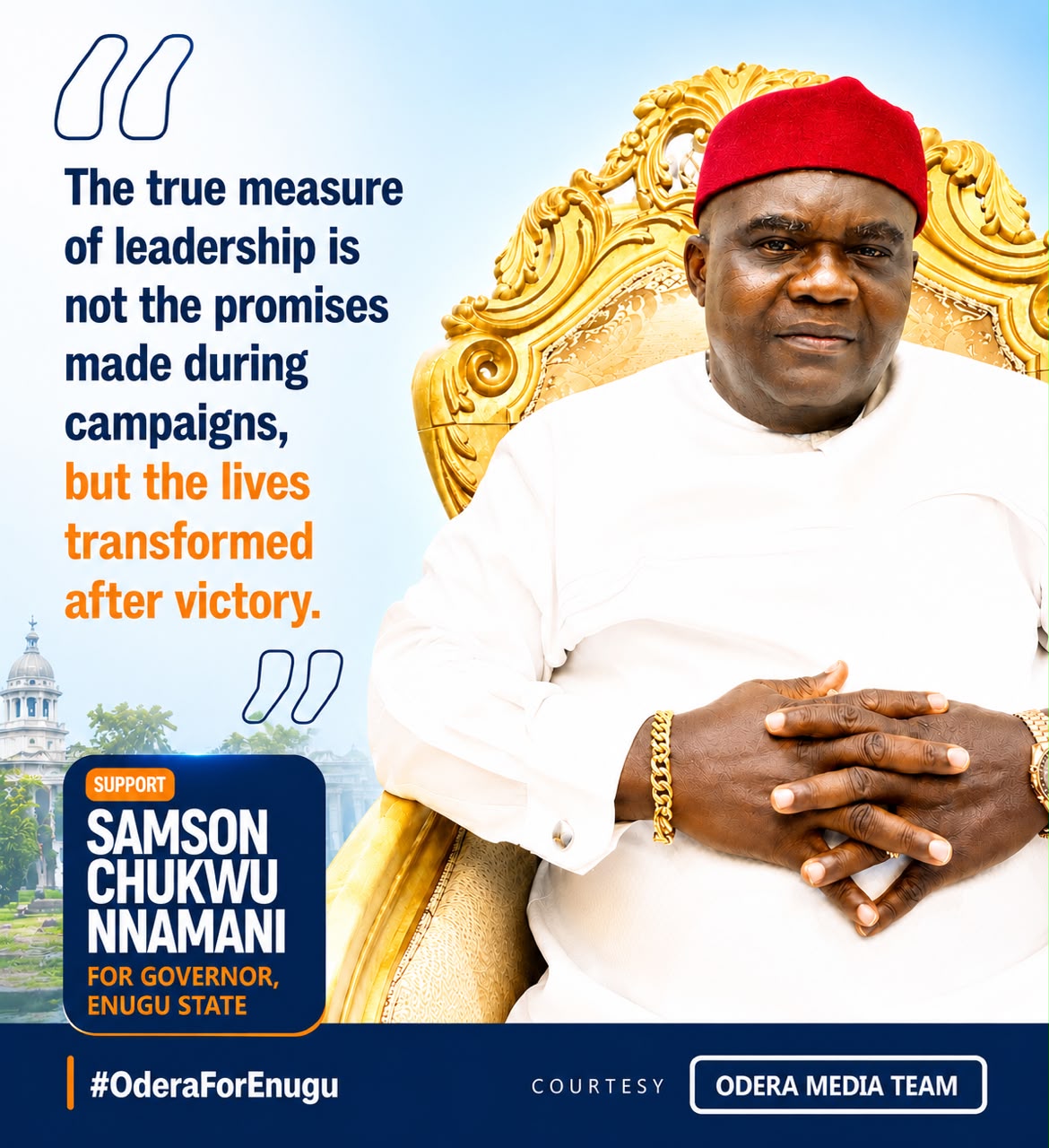
Leadership is often discussed in the language of power, position, and privilege, yet history repeatedly shows that the most enduring leaders are shaped not by authority alone but by values formed early and tested over time. Long before titles are earned or platforms acquired, the foundations of leadership are laid quietly in childhood experiences, community interactions, and an instinctive response to the needs of others. This truth finds clear expression in the life journey of Chief Samson Chukwu Nnamani, whose path to public relevance has been guided less by ambition and more by a consistent ethic of service.
Born in 1971 into the family of Nnamani Chukwu of Ajama-Akpawfu in Nkanu East Local Government Area of Enugu State, Chief Nnamani grew up within a close-knit rural community where shared responsibility and communal survival were not abstract ideals but daily practice. In such settings, the welfare of one person was inseparable from that of the collective, and compassion was not optional - it was expected. These early influences later became defining traits in his adult life.
From his formative years, he was known among peers not merely for academic engagement but for an unusual sensitivity to the struggles of others. Schoolmates recall a young man who instinctively stepped in to assist classmates who lacked basic necessities, whether through material support, advocacy, or quiet encouragement. This disposition was not cultivated for recognition; rather, it appeared to be an extension of character - an internal compass oriented toward fairness and empathy.
As he progressed through primary and secondary education, this reputation deepened. Within age-grade circles and community youth groups, he was widely regarded as approachable and dependable, someone who could be trusted to act in the interest of others. While many adolescents are consumed by self-definition, Chief Nnamani’s defining impulse was outward-looking. He paid attention to those falling behind and sought ways, however modest, to bring them along.
These traits became more pronounced as he matured and encountered broader social realities. Exposure to inequality, both within and beyond his immediate environment, sharpened his awareness of how opportunity, or the lack of it shapes human destiny. Rather than fostering resentment, these observations strengthened his resolve to become part of the solution. Even as personal aspirations evolved, the underlying motivation remained constant: to create value that extended beyond self.
Those who interacted with him during his early adult years often speak of a man who listened more than he spoke and acted more than he promised. In a society where public generosity is sometimes performative, his approach was notably understated. Assistance was offered quietly, relationships were maintained with sincerity, and commitments were honoured without fanfare. This consistency gradually earned him trust across social strata, reinforcing his standing as a person whose word carried weight.
Over time, as life experiences expanded beyond local boundaries and opportunities emerged abroad, his worldview broadened without losing its moral centre. Living outside Nigeria exposed him to structured systems of social support and organised philanthropy, further shaping his understanding of how individual success could be leveraged for collective good. Rather than disconnecting him from home, this exposure deepened his sense of responsibility to the communities that shaped him.
It was this convergence of early values and global perspective that later crystallised into a more structured commitment to humanitarian service. The decision to formalise years of informal assistance into an organised platform was not sudden; it was the natural progression of a lifelong pattern. Friends and associates often note that the creation of the Odera Helping Hand Foundation was less an initiative than a continuation of an institutional expression of habits already ingrained.
What distinguishes Chief Samson Chukwu Nnamani’s leadership style is not merely generosity but intentionality. His interventions are guided by an understanding that dignity matters as much as relief. Whether supporting education, healthcare, or economic empowerment, the emphasis has consistently been on restoring agency to beneficiaries rather than fostering dependency. This philosophy reflects a leader who understands development as a partnership, not a transaction.
Community leaders across Enugu State have repeatedly described him as a bridge-builder - someone able to relate comfortably with traditional institutions, youth groups, professionals, and the most vulnerable members of society. Such versatility is rare and speaks to a leadership identity grounded in authenticity rather than performance. It is also a reminder that influence rooted in character often outlasts influence derived from position.
In an era marked by cynicism toward public figures, the story of Chief Samson Chukwu Nnamani offers a counter-narrative. It suggests that leadership can still be anchored in conscience, that compassion can coexist with effectiveness, and that service need not be loud to be transformative. His journey underscores the idea that the true test of leadership is not how much power one wields, but how consistently one shows up for others - especially when no applause is guaranteed.
As his humanitarian engagements continue to touch lives across communities, the values formed in Ajama-Akpawfu decades ago remain clearly visible. They surface in every intervention, every partnership, and every life restored to hope. In this sense, his story is not merely a personal biography but a case study in how early character, when nurtured and sustained, can evolve into leadership that genuinely serves humanity.
Leave a Reply
Your email address will not be published. Required fields are marked *
Category
 Crime & Security
 Health
 Technology
 Politics
 Business & Economy
 Entertainment
.jpeg) Interviews
Interviews Sports
  Culture & Tourism
 Religion
  Education
  News
News Opinion