Home > Opinion > Osun and Anambra Elections Send a Seriou...
Osun and Anambra Elections Send a Serious Message to Mbah Ahead of 2027
By AnchorNews | 17 Aug, 2026 11:33:52pm | 312
By Dr. Buchi Nnaji
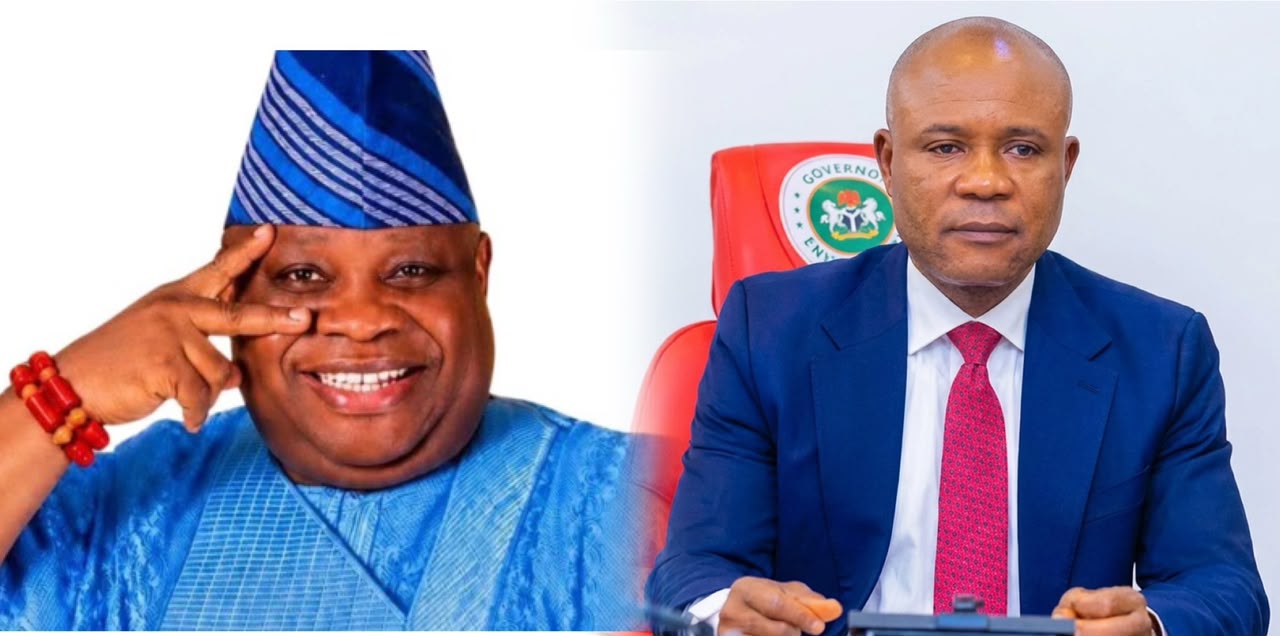
The recently concluded Osun State governorship election has delivered a message that Governor Peter Mbah and his political allies in Enugu cannot afford to ignore: defecting to the ruling All Progressives Congress (APC) does not guarantee electoral victory. Governor Ademola Adeleke of the Accord Party defeated the APC candidate, Bola Oyebamiji, with 511,067 votes against 444,815, winning 19 of the state's 30 local government areas. The result is particularly significant because Adeleke himself had changed political platforms, leaving the Peoples Democratic Party (PDP) for Accord before seeking re-election. Yet the electorate returned him for another term. Adeleke's experience proves that party switching does not automatically determine the fate of an incumbent; voter acceptance remains decisive.
The Osun outcome is therefore about more than the defeat of an APC candidate. It demonstrates that political calculations by the elite do not automatically determine electoral outcomes. APC had the enormous advantage of being the party controlling the Federal Government, yet that advantage did not translate into victory in Osun. Adeleke's re-election suggests that his political acceptability and relationship with the electorate mattered more than the party label under which he contested. Indeed, in his post-election remarks, Adeleke attributed his victory to the people of Osun and said they had recognised what he described as the dividends of his administration. Whatever assessment one makes of his administration, the central point is clear: voters ultimately decide whether an incumbent deserves another mandate, not the political party to which the incumbent belongs.
The Osun lesson becomes even more compelling when placed alongside the 2025 Anambra governorship election. Governor Chukwuma Charles Soludo remained with the All Progressives Grand Alliance (APGA) and did not defect to APC, yet he won an overwhelming second-term victory. Soludo polled 422,664 votes against 99,445 for APC candidate Nicholas Ukachukwu and won all 21 local government areas. The Anambra result demonstrated that an incumbent does not need to abandon his political platform and join the party controlling Abuja to secure re-election. Where voters are sufficiently convinced by a candidate and are willing to renew his mandate, the absence of federal ruling-party affiliation is not necessarily an electoral disadvantage.
Taken together, Osun and Anambra seriously challenge the assumption that political survival depends primarily on belonging to the ruling party. Osun showed that APC can be defeated even when it controls the Federal Government, while Anambra showed that an incumbent can win overwhelmingly without joining APC. Neither election suggests that political structures are irrelevant; rather, they demonstrate that political machinery is not the same thing as a popular mandate. A party can provide organisation, resources, visibility and access to political power, but it cannot automatically command the conscience of every voter. APC may be the ruling party, but it is certainly not a magic wand for electoral victory.
This lesson is particularly important in Enugu, where Mbah's October 2025 defection from PDP to APC was accompanied by a substantial movement of political officeholders and party officials. Reports at the time indicated that the governor was joined by political appointees, elected local-government chairmen, councillors, state lawmakers and a large proportion of PDP executives in the state. Five Enugu members of the House of Representatives also subsequently defected to APC. The scale of this political realignment should not be dismissed, but neither should it be confused with the movement of voters. Politicians can change parties for political reasons; voters remain free to make their own choices. A lawmaker can cross the political divide, a commissioner can obtain a new party card and a party executive can change allegiance, but none of them can transfer the votes of the people they represent to Governor Mbah.
Indeed, Mbah's defection could ultimately prove to be a serious political blunder because it has created a question that the opposition can take directly to the electorate. Mbah was elected governor in 2023 on the PDP platform, but he is now asking the same electorate to renew his mandate under APC. The question is therefore unavoidable: why should voters who gave Mbah their mandate under the PDP automatically transfer that mandate to him under APC? If the governor's argument is that joining APC will provide Enugu with greater access to the Federal Government and additional development opportunities, then the people are entitled to ask what tangible benefits have resulted from that political realignment. Political alignment with Abuja cannot, by itself, become a substitute for measurable improvement in the lives of citizens.
This is where the Osun experience offers an especially important contrast. Adeleke changed parties and still had to secure the acceptance of the people. His victory suggests that voters can look beyond political platforms when they are sufficiently comfortable with an incumbent's leadership and believe that continuity serves their interests. In Enugu, however, the opposition has an opportunity to ask whether the same level of public comfort exists with Mbah's administration. There are complaints among sections of the population about the economic pressure they are experiencing, including concerns over taxation and the wider cost of living. Such concerns should not simply be dismissed as opposition rhetoric. They provide legitimate issues for public debate about whether government policies are easing or increasing the burdens faced by traders, artisans, workers, businesses and households. If voters feel economically squeezed, changing the governing party cannot automatically make them more willing to renew the governor's mandate.
The Anambra experience reinforces this argument. Soludo did not need to change APGA simply because APC controlled the Federal Government; he went before the electorate on the platform with which voters already associated him and won decisively. The implication for Enugu is straightforward: an incumbent who enjoys sufficient popular support does not need to depend on a change of party as the foundation of his re-election strategy. Conversely, joining the ruling party cannot substitute for public confidence where voters have serious reservations about an administration. Mbah may have acquired the APC platform, but he has not acquired ownership of the Enugu electorate. The votes that produced his 2023 victory remain the independent decisions of Enugu voters, not political assets that can be transferred from PDP to APC.
For the opposition, this creates a significant opportunity ahead of 2027. But the opportunity will only become meaningful if the opposition avoids complacency and fragmentation. It must unite around a credible and broadly acceptable candidate, build a disciplined grassroots organisation and present a convincing alternative to the electorate. Most importantly, it must take the campaign beyond Mbah's defection and place his record before the people. The opposition should ask voters to compare promises with outcomes and political realignment with tangible benefits. It should also address the concerns of ordinary citizens about the cost of living, taxation, employment, business conditions, infrastructure, education, healthcare and security. A new party platform cannot erase an old record, and political realignment cannot substitute for performance.
The real lesson from Osun and Anambra is therefore clear: elections are won by voters, not by defections, political structures or narratives portraying victory as a foregone conclusion. Adeleke changed parties and still had to earn the confidence of Osun voters. Soludo remained with APGA and demonstrated that an incumbent could defeat APC without joining it. Mbah has now moved from PDP to APC, but the people who elected him in 2023 have not surrendered their independent judgment. If the opposition in Enugu learns the lessons of Osun and Anambra, remains united, presents a credible alternative and connects directly with the concerns of ordinary citizens, Mbah's defection could ultimately be remembered not as the masterstroke his supporters portray it to be, but as a political gamble that opened the door to his defeat in 2027. The politicians may have changed parties, but the voters of Enugu remain free to change their governor.

Leave a Reply
Your email address will not be published. Required fields are marked *
Category
 Religion
  Politics
 Entertainment
 Health
 Culture & Tourism
 Technology
 Education
  News
News Business & Economy
 Crime & Security
 Sports
 .jpeg) Interviews
Interviews Opinion